ANCA-associated vasculitis
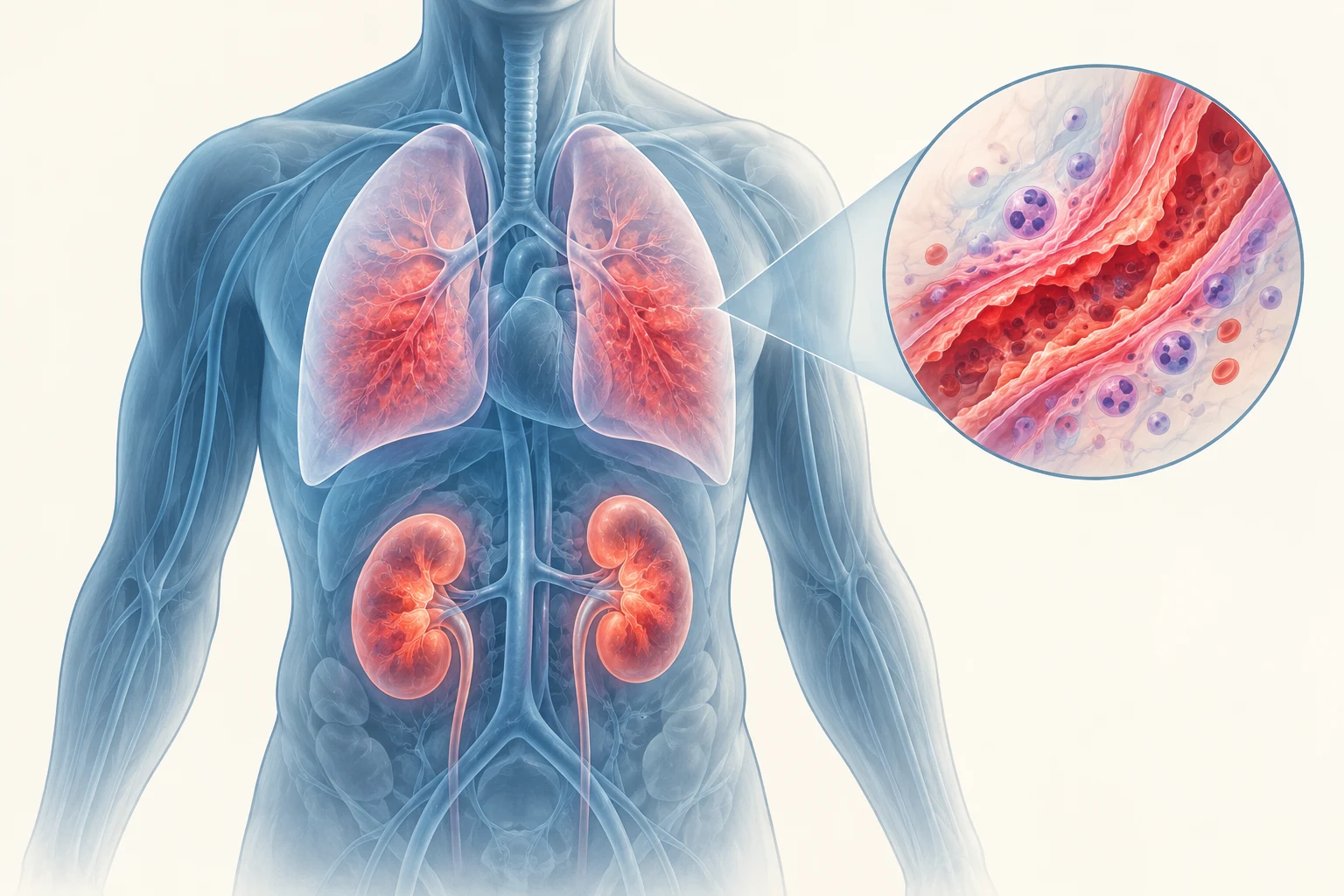
A group of small-vessel vasculitides: granulomatosis with polyangiitis, microscopic polyangiitis and eosinophilic granulomatosis with polyangiitis.
About the condition
A group of small-vessel vasculitides: granulomatosis with polyangiitis, microscopic polyangiitis and eosinophilic granulomatosis with polyangiitis.
The group includes GPA, MPA and EGPA. Small vessels are mainly affected; ANCA status does not replace organ assessment.
Symptoms
Persistent ENT symptoms, rash, breathlessness and kidney involvement may occur. Features depend on the vasculitis type.
Kidney injury can be painless, making urine tests important. EGPA often involves asthma and eosinophilia and may cause neuropathy.
Diagnosis
Interpret ANCA with clinical features, blood and urine tests. Imaging and biopsy may be needed.
Interpret PR3-ANCA and MPO-ANCA clinically. Assess creatinine, urine sediment, lungs and indicated histology; exclude infection.
Treatment
Specialist treatment suppresses inflammation and protects organs. Regimens depend on severity and require infection monitoring.
Distinguish remission induction from maintenance. Organ-threatening GPA/MPA often warrants rituximab or cyclophosphamide within a treatment regimen.
Monitoring
Monitor urine, kidney function and disease activity. Coughing blood or rapidly worsening breathlessness needs emergency care.
An ANCA rise alone is not a relapse. Integrate symptoms, urine, organ function and adverse effects; plan infection prevention.
Sources
Content date: