Calcium pyrophosphate deposition disease (CPPD)
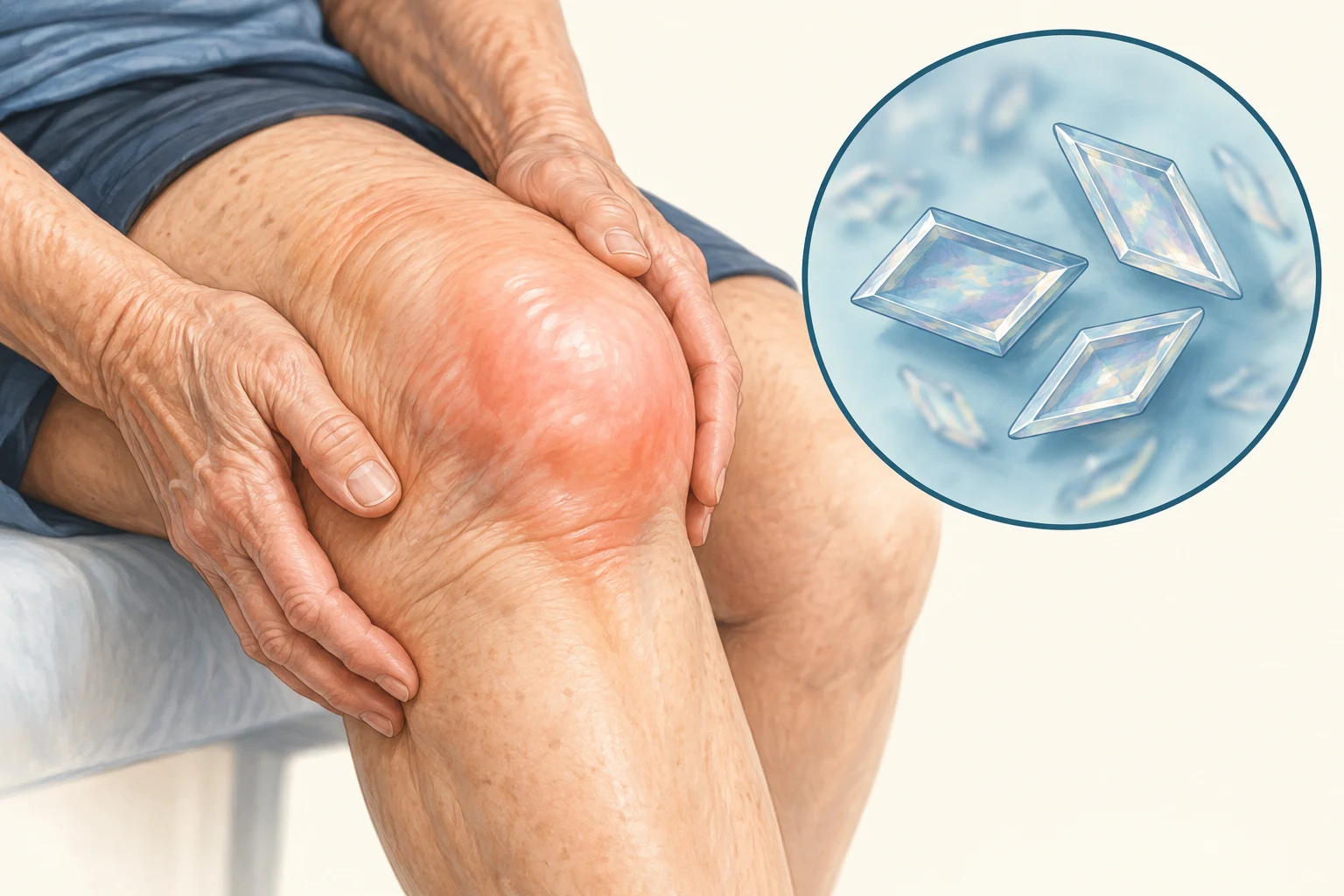
Calcium pyrophosphate crystals deposited in joint tissues. Manifestations range from asymptomatic findings to acute or chronic arthritis.
About the condition
Calcium pyrophosphate crystals deposited in joint tissues. Manifestations range from asymptomatic findings to acute or chronic arthritis.
Calcium pyrophosphate crystals differ from gout urate crystals. Deposits can be asymptomatic or cause acute and chronic inflammation.
Symptoms
Acute painful swelling, especially of knees or wrists, or chronic symptoms may occur. CPPD can resemble gout or other arthritis.
Knees and wrists are commonly affected; fever may accompany attacks. Appearance alone cannot reliably exclude joint infection.
Diagnosis
Joint fluid analysis and imaging are used when indicated. Infection is considered as an alternative cause of a hot swollen joint.
Look for joint-fluid crystals and chondrocalcinosis on X-ray or ultrasound. Early onset prompts assessment for metabolic contributors.
Treatment
Treatment reduces inflammation and pain and may include aspiration and local therapy. There is no standard specific medicine that removes CPP crystals.
Anti-inflammatory treatment, sometimes aspiration and joint injection after excluding infection, may help. Urate-lowering drugs do not dissolve CPP crystals.
Monitoring
For recurrent attacks, prevention and associated metabolic disorders are discussed. A clinician sets follow-up and additional testing needs.
Recurrent attacks prompt discussion of prevention and comorbidities. Plans account for kidneys, stomach and other medicines.
Sources
Content date: