Giant cell arteritis
Vasculitis of large and medium arteries, usually occurring after age 50. Visual changes with suspected disease require urgent medical assessment.
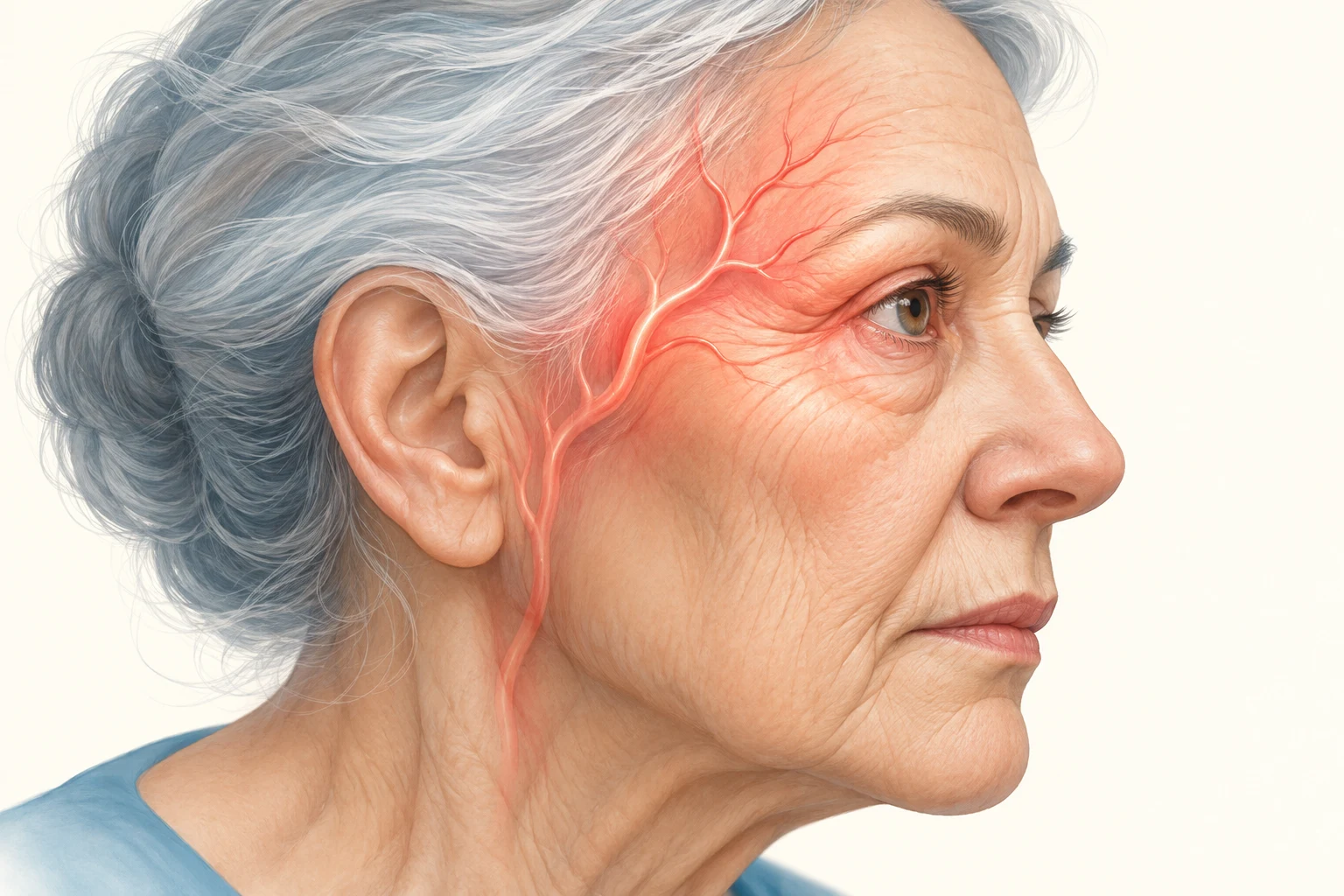
About the condition
Vasculitis of large and medium arteries, usually occurring after age 50. Visual changes with suspected disease require urgent medical assessment.
Large- and medium-artery vasculitis can impair optic nerve blood supply. Rapid recognition helps prevent irreversible sight loss.
Symptoms
New headache, scalp tenderness, jaw pain when chewing and visual disturbance occur. The disease is more common after age 50.
Transient vision loss and double vision are concerning. Fatigue, weight loss and polymyalgia symptoms can occur without prominent temporal pain.
Diagnosis
Assess inflammatory markers and arterial ultrasound or biopsy as indicated. When vision is threatened, testing must not delay treatment.
Ultrasound, biopsy and large-vessel imaging depend on the situation. A single normal test does not remove the need for urgent assessment when vision is threatened.
Treatment
Urgent medical treatment, usually with glucocorticoids, is required. Visual symptoms need same-day care.
Treatment starts with well-founded suspicion without waiting for every result. Tocilizumab can reduce steroid exposure in selected patients.
Monitoring
Monitor relapse and treatment effects. Sudden vision loss or stroke symptoms require emergency care immediately.
Review head and visual symptoms, vascular complications and drug toxicity. With IL-6 blockade, CRP may underestimate inflammation.
Sources
Content date: