Gout
A condition associated with monosodium urate crystal deposition. It may cause attacks of arthritis and the formation of tophi.
About the condition
A condition associated with monosodium urate crystal deposition. It may cause attacks of arthritis and the formation of tophi.
Monosodium urate deposits with sustained urate excess. Pain may disappear between attacks while crystals remain.
Symptoms
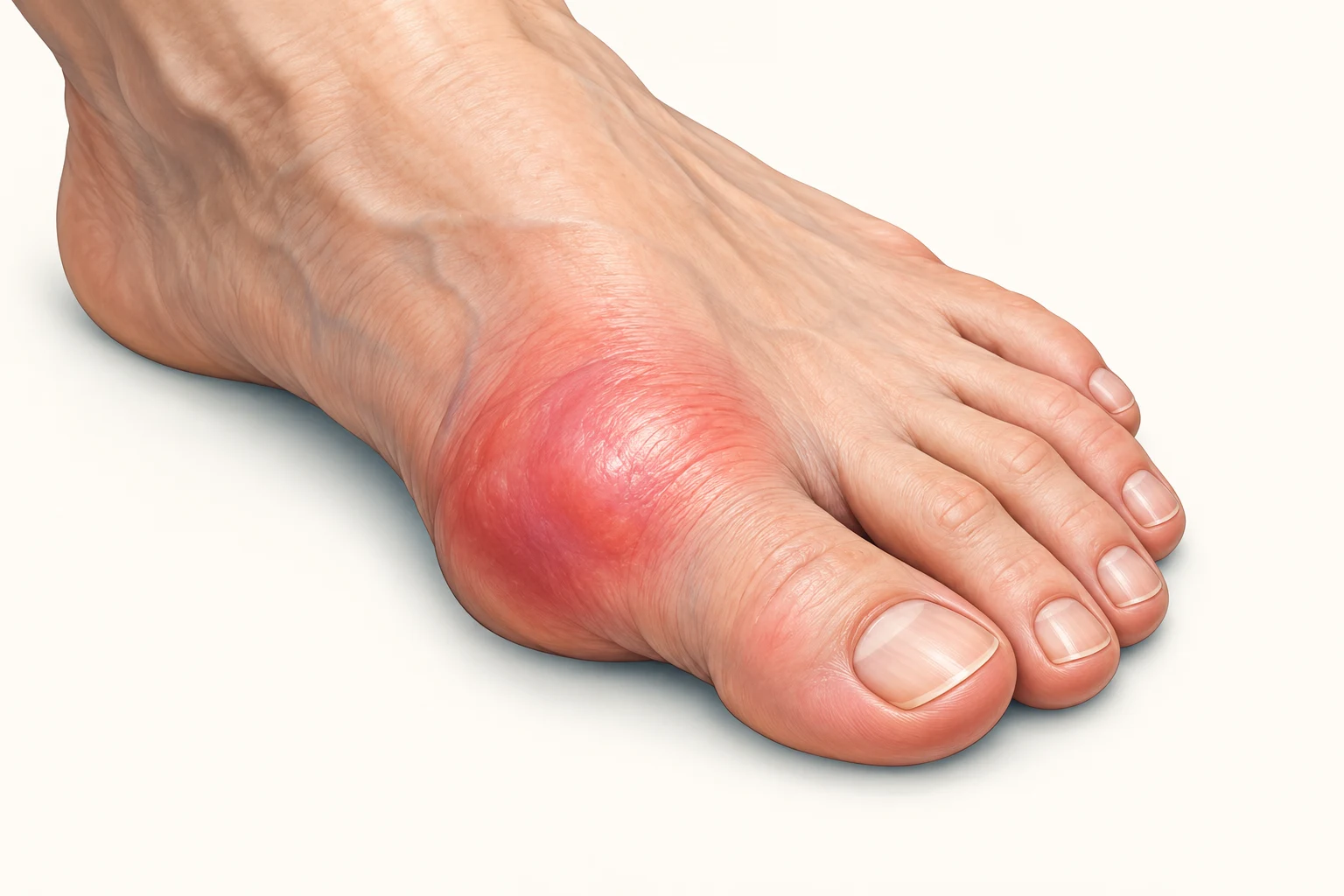
A typical attack causes sudden severe joint pain, redness and swelling, often at the base of the big toe. Other joints and tophi may be involved.
Attacks often start suddenly with severe tenderness and redness. Tophi and chronic joint damage may develop over time.
Diagnosis
Joint fluid may be tested for crystals. Uric acid can be normal during an attack; septic arthritis is excluded.
Urate can be normal during a flare. Joint-fluid crystals confirm the diagnosis; imaging assists selected cases.
Treatment
Treating an attack and lowering urate long term are separate goals. A clinician selects medicines; diet and weight management support but do not replace treatment.
Flare relief and long-term urate lowering are separate goals. Allopurinol or febuxostat is guided by urate monitoring; diet alone is often insufficient.
Monitoring
Uric acid, attacks, tophi and kidney function are monitored. Long-term therapy is adjusted to targets and tolerance, not just the absence of pain.
A usual urate target is below 360 µmol/L; clinicians individualise it. Consider kidneys, stones, alcohol and cardiovascular risk.
Sources
Content date: