Rheumatoid arthritis
A chronic inflammatory condition that primarily affects joints and may also have manifestations outside the joints.
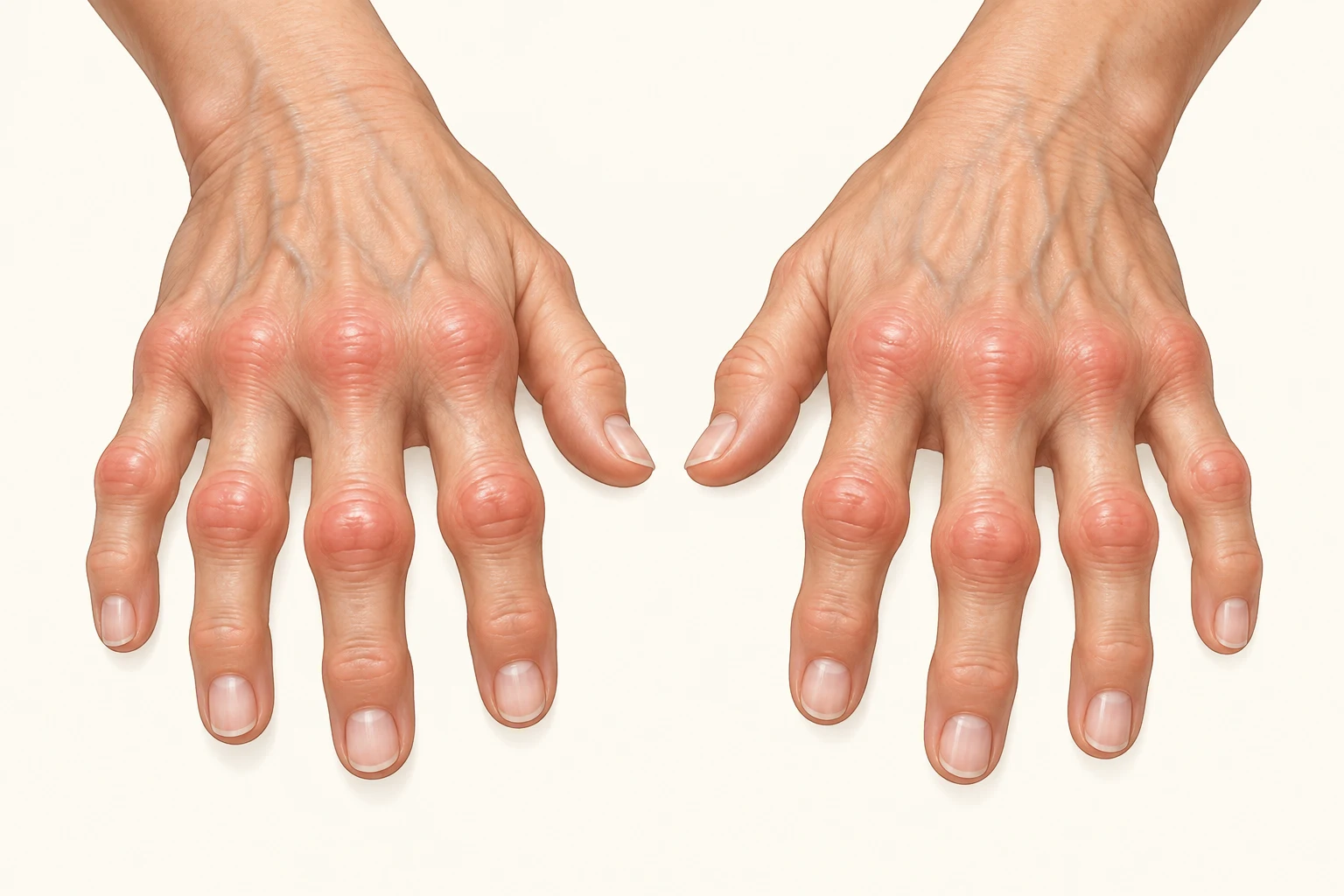
About the condition
A chronic inflammatory condition that primarily affects joints and may also have manifestations outside the joints.
Immune inflammation affects the synovial lining. Early treatment preserves function; RA is not contagious or simply age-related wear.
Symptoms
Joint pain and swelling, morning stiffness and fatigue. Hands and feet are often affected on both sides.
Symmetrical hand and foot symptoms, prolonged morning stiffness and impaired fine movements are typical. Dry eyes, nodules and breathlessness may occur.
Diagnosis
Joint examination is supported by RF, anti-CCP, ESR/CRP and imaging when indicated. Normal blood tests do not exclude RA.
RF and anti-CCP support assessment, but negative tests do not exclude RA. Ultrasound detects synovitis; imaging establishes a baseline for damage.
Treatment
The goal is to control inflammation and preserve function. A clinician selects disease-modifying therapy; physical activity and joint protection support treatment.
The target is remission or low activity. Methotrexate and other DMARDs modify disease; inadequate response may lead to biologic or targeted therapy.
Monitoring
Symptoms, joints, activity and medication safety are monitored. A clinician sets testing intervals; RAPID3 is discussed alongside examination findings.
Visits assess joints, activity scores, function and medicine safety. Smoking cessation, suitable activity and cardiovascular risk control complement treatment.
Sources
Content date: