Reactive arthritis
Inflammatory arthritis that develops after an infection. Assessment includes identifying the preceding infection and excluding other causes of arthritis.
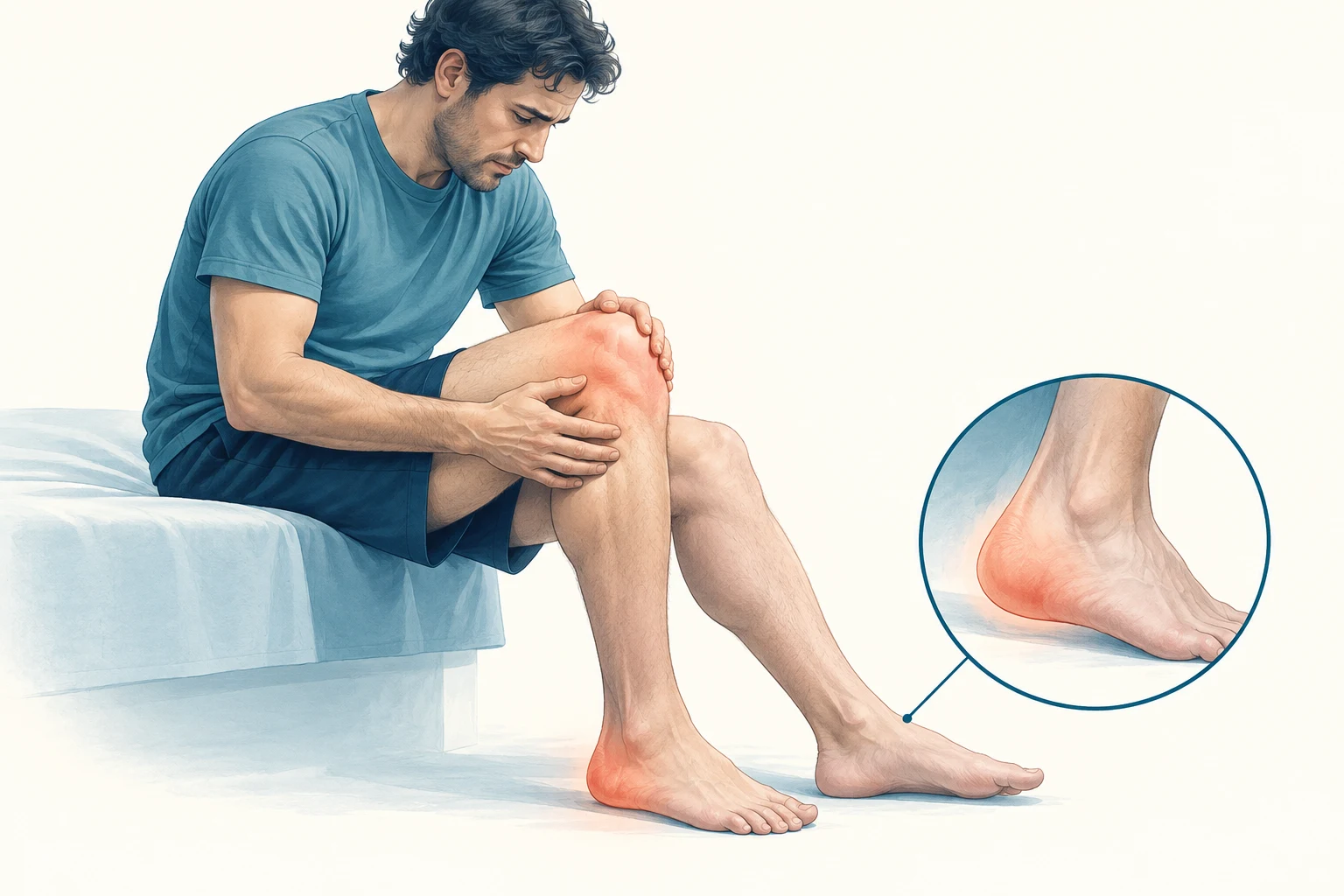
About the condition
Inflammatory arthritis that develops after an infection. Assessment includes identifying the preceding infection and excluding other causes of arthritis.
Immune inflammation follows an infection outside the joint. This differs from direct bacterial infection of the joint itself.
Symptoms
Arthritis may follow a bowel or urogenital infection. Heel pain, eye inflammation and genitourinary symptoms can occur.
Leg joints are often affected asymmetrically; enthesitis, urinary symptoms, conjunctivitis and skin changes may occur. The classic triad is not universal.
Diagnosis
Recent infection is reviewed, joints are examined and testing is tailored. In acute arthritis, infection within the joint must be excluded.
Ask about preceding diarrhoea and sexually transmitted infection; tailor testing to history. An acutely hot joint may need aspiration to exclude infection.
Treatment
Inflammation is controlled and function restored. Antibiotics are prescribed for confirmed current bacterial infection, not for every patient with arthritis.
Treat confirmed active infection separately. Antibiotics are not automatic treatment for all arthritis; persistent inflammation may require a DMARD.
Monitoring
Arthritis duration, function and response are followed. A painful red eye or reduced vision requires urgent care.
Track swelling, walking recovery and recurrence. Confirmed sexually transmitted infection may require partner assessment under clinical guidance.
Sources
Content date: