Systemic sclerosis
A systemic autoimmune condition associated with vascular changes and fibrosis. Skin and internal organ involvement require individual assessment.
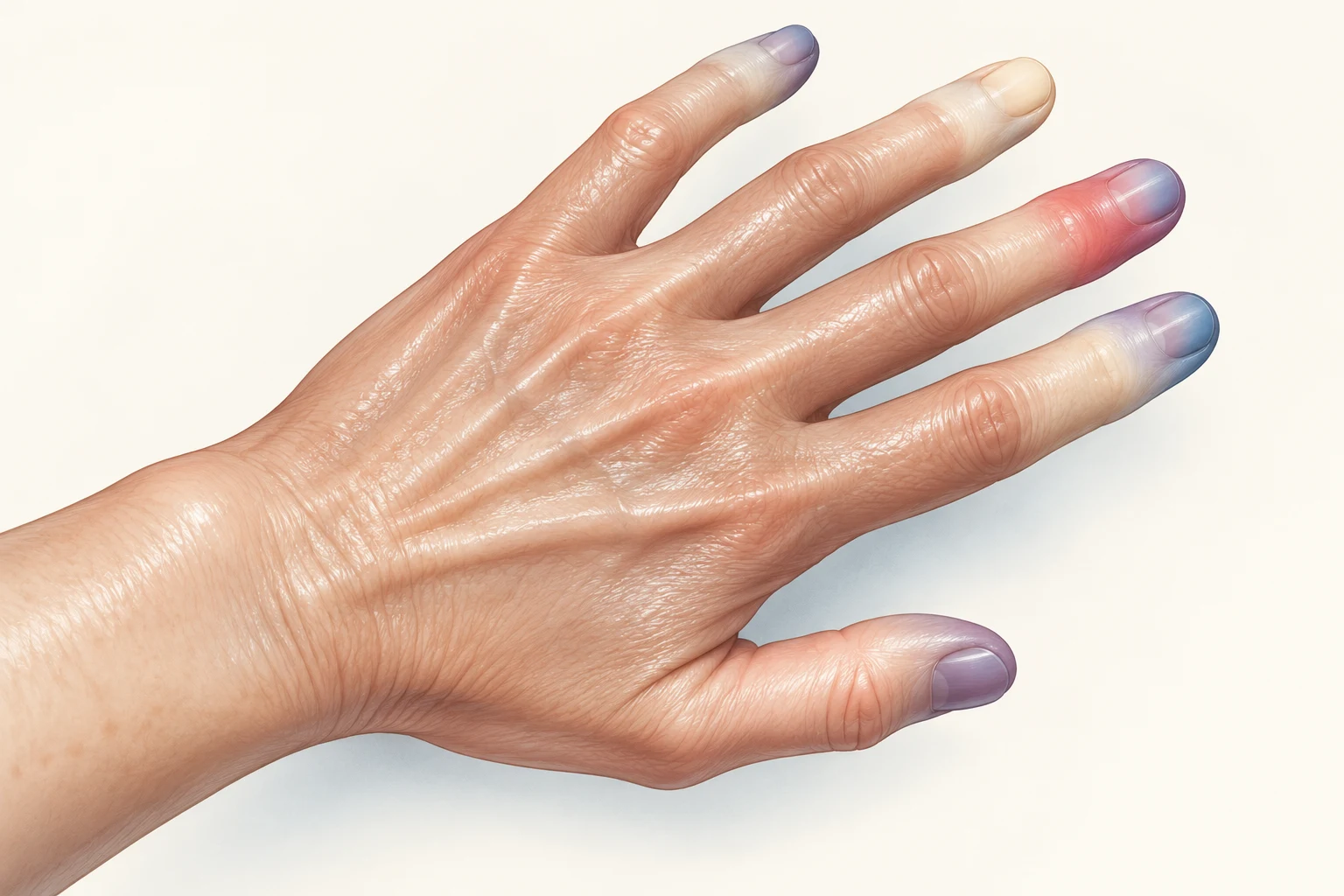
About the condition
A systemic autoimmune condition associated with vascular changes and fibrosis. Skin and internal organ involvement require individual assessment.
Systemic sclerosis combines vascular dysfunction, autoimmunity and fibrosis. Limited and diffuse skin forms differ in extent; both need organ screening.
Symptoms
Raynaud phenomenon, puffy or thickened finger skin and reflux may occur. Breathlessness can signal organ involvement.
Fingers may turn white or blue in cold, sometimes with tip ulcers. Report swallowing problems and reduced exercise tolerance.
Diagnosis
Assess skin, nailfold capillaries and autoantibodies. Lung, heart and kidney evaluation establishes disease extent.
Assessment may include capillaroscopy, lung function, CT and echocardiography. Clinical subtype and risk determine test selection and frequency.
Treatment
Treatment targets vascular problems, reflux or organ involvement. Protecting against cold and stopping smoking are important.
Different manifestations need vascular, reflux, immunosuppressive or antifibrotic treatment. Systemic steroids require particular caution because of renal crisis risk.
Monitoring
Monitor blood pressure, kidney, lung and heart function. Sudden hypertension with headache needs urgent assessment.
Plan regular assessment for pulmonary hypertension and interstitial lung disease. Home blood-pressure checks can reveal dangerous changes earlier.
Sources
Content date: