Antiphospholipid syndrome
An autoimmune condition associated with thrombosis and/or specific pregnancy complications in the presence of relevant antiphospholipid antibodies.
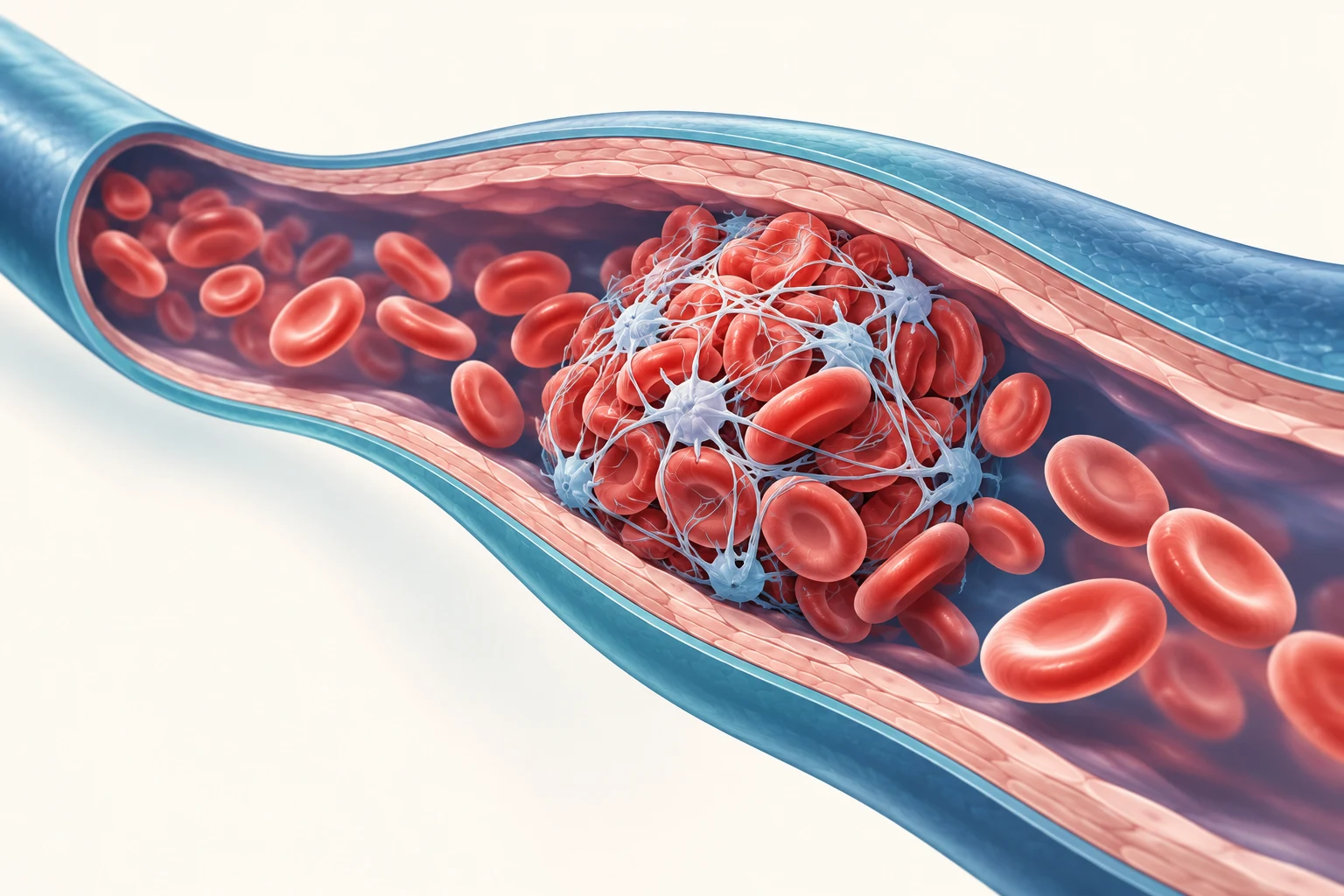
About the condition
An autoimmune condition associated with thrombosis and/or specific pregnancy complications in the presence of relevant antiphospholipid antibodies.
Antibodies are associated with thrombosis; APS may occur alone or with lupus. An incidental positive test needs clinical interpretation.
Symptoms
The syndrome may cause thrombosis and pregnancy complications. Antibodies alone are not equivalent to the syndrome.
Venous or arterial thrombosis and certain obstetric complications may occur. People may feel well between events.
Diagnosis
Diagnosis considers clinical history and antiphospholipid antibodies. Persistence is usually checked with repeat testing at least 12 weeks apart.
Testing includes lupus anticoagulant, anticardiolipin and anti-β2GPI. Anticoagulants can interfere with some assays, so plan testing carefully.
Treatment
Antithrombotic therapy is individualised. Pregnancy requires coordinated care; do not start or stop medicines independently.
Thrombosis often requires long-term anticoagulation. Drug choice depends on the event and antibody profile; direct anticoagulants are not suitable for everyone.
Monitoring
Warfarin requires INR monitoring. Sudden breathlessness, chest pain or swelling of one leg needs urgent care.
Review bleeding risk, interactions and surgery plans. Pregnancy needs coordinated rheumatology, obstetric and thrombosis care.
Sources
Content date: