Osteoporosis
A skeletal condition with increased bone fragility and fracture risk. Risk assessment considers clinical factors and, when needed, bone densitometry.
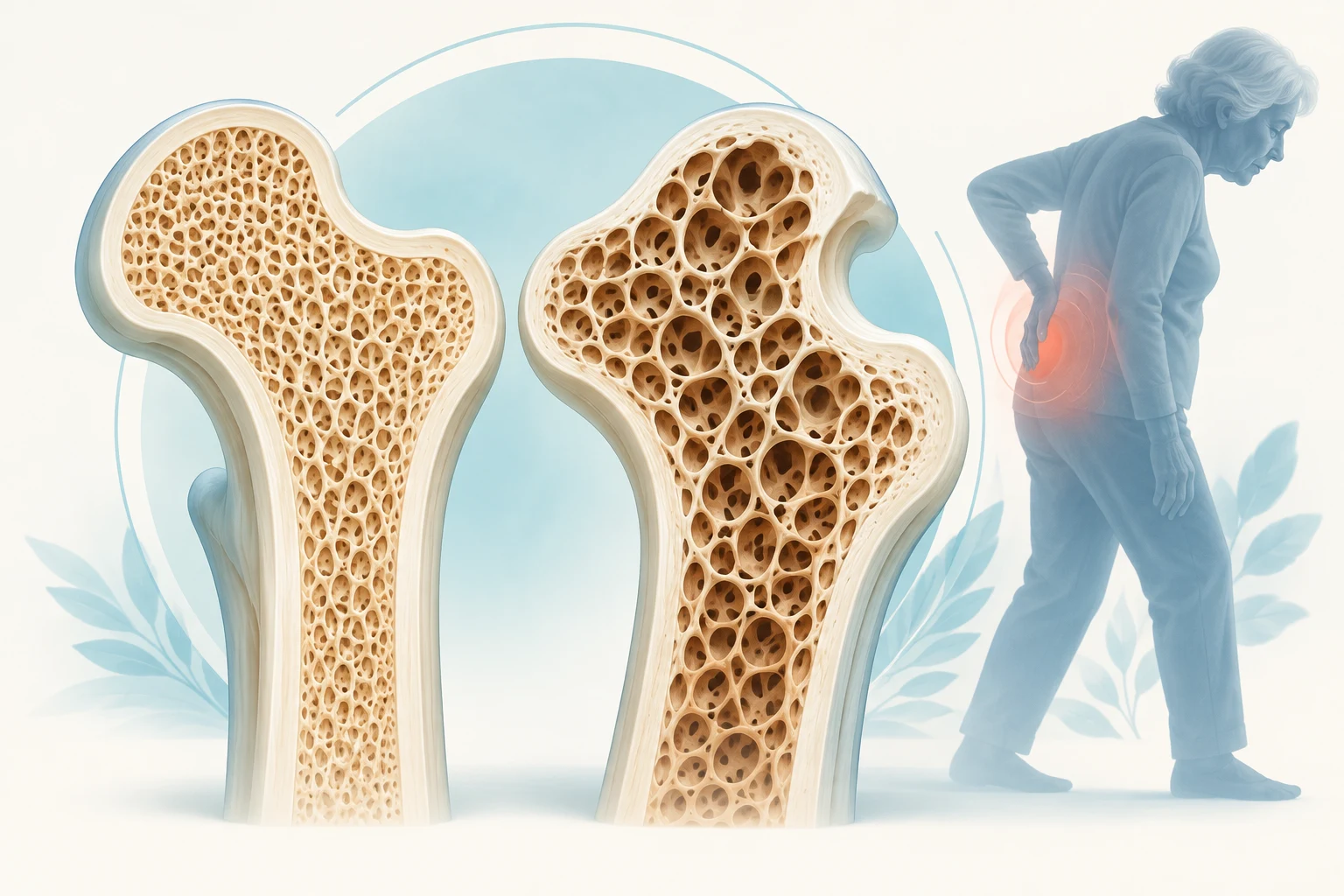
About the condition
A skeletal condition with increased bone fragility and fracture risk. Risk assessment considers clinical factors and, when needed, bone densitometry.
Reduced bone strength increases fracture risk after minor trauma. The condition is often painless until a fracture occurs.
Symptoms
Often asymptomatic until a fracture. Height loss, new back pain or a fracture after minor trauma warrants assessment.
Vertebral fractures can cause height loss and new back pain. Hip, spine and wrist fractures are particularly important.
Diagnosis
Fractures, risk factors and bone mineral density by DXA are assessed. FRAX complements evaluation; secondary causes of bone loss are investigated.
DXA measures bone density, but decisions include previous fractures and overall risk. Assess secondary causes and long-term steroid exposure.
Treatment
Treatment is based on fracture risk and may include bone-active medicines. Adequate nutrition, safe physical activity and fall prevention are important.
Risk guides bisphosphonates, denosumab or bone-anabolic therapy. Adequate nutrition and fall prevention matter but may not replace medication.
Monitoring
Repeat assessments are individualized. Do not stop treatment yourself: some medicines increase fracture risk if stopped without a transition plan.
Repeat DXA is individualised. Do not miss or stop denosumab without a follow-on plan because of vertebral fracture risk.
Sources
Content date: